Avalon - Gifts, Antiques & Plants
Chinese Elm Bonsai (mini)
Chinese Elm Bonsai (mini)
Couldn't load pickup availability
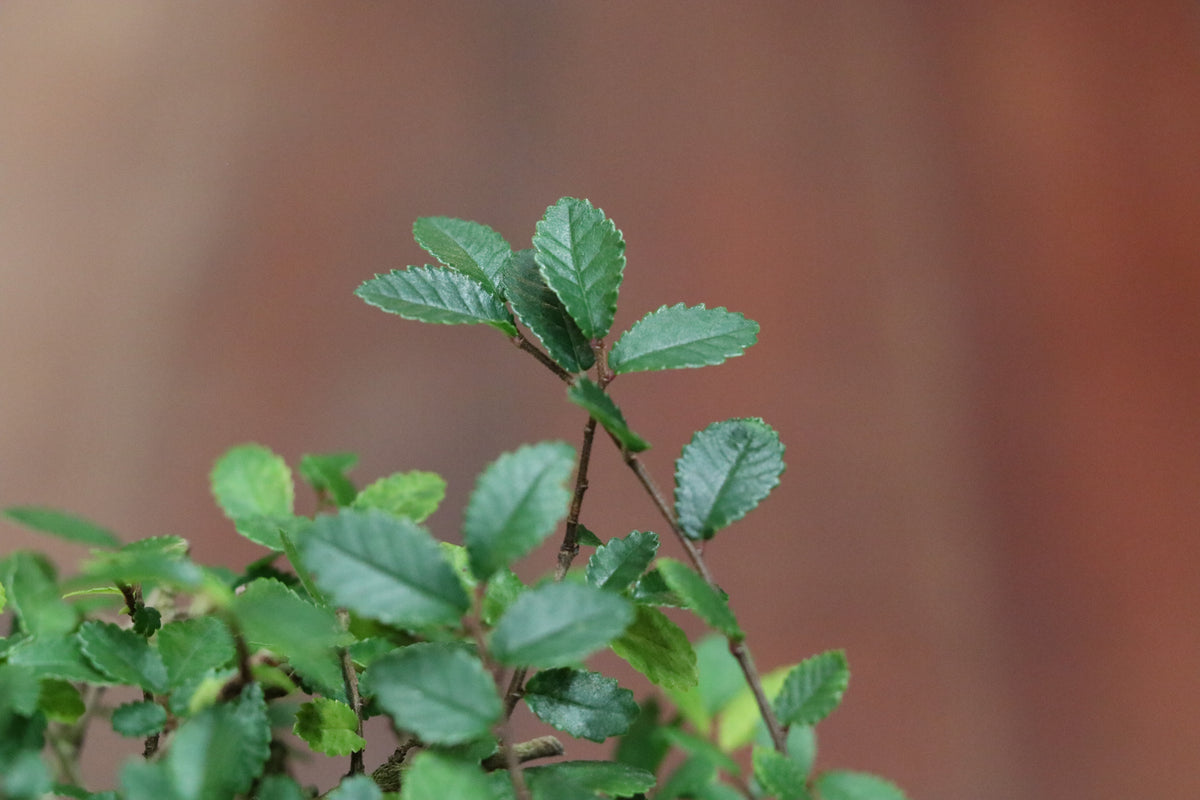
The Chinese Elm Bonsai is admired for its small, serrated green leaves, finely branched canopy and distinctive textured bark. Its delicate foliage and naturally elegant growth habit create a balanced and harmonious appearance, making it a charming decorative feature for a home, office or garden.
The Chinese Elm, botanically known as Ulmus parvifolia, is a deciduous or semi-evergreen tree native to East Asia, particularly China, Korea and Japan. Depending on the climate and growing conditions, the tree may retain some of its foliage throughout the year or shed its leaves during the colder months. The Chinese Elm responds well to regular pruning, allowing its shape and miniature proportions to be maintained over time. A
Height: 25 cm
Pot: 11.5 x 8 cm
Care
Light
Place your Chinese Elm Bonsai in a bright location with plenty of natural light. A position with several hours of sunlight each day encourages healthy foliage, strong growth and compact branching. During the warmer months, the bonsai generally benefits from being placed outdoors in a sheltered position with good air circulation and access to sunlight. If you keep your Chinese Elm indoors, position it near a bright window where it receives as much natural light as possible. Avoid placing it in a dark corner or directly beside a heat source, as insufficient light and dry air can weaken the tree. When moving the bonsai between indoor and outdoor environments, gradually acclimatise it to changes in light and temperature to minimise stress.
Water
Water your Chinese Elm Bonsai regularly to keep the growing medium slightly moist without allowing it to become waterlogged. Check the soil frequently and water thoroughly when the surface begins to dry. Because this bonsai is planted in a relatively small pot, the growing medium can dry out quickly, particularly during warm or sunny weather. Ensure that excess water drains freely from the pot to prevent root problems. Avoid allowing the root ball to dry out completely, as prolonged dryness can lead to wilting, yellowing leaves or leaf drop. Watering frequency will vary according to the season, temperature, light levels and airflow, so always check the soil rather than following a fixed schedule.
Temperature
The Chinese Elm Bonsai is adaptable and can tolerate a range of temperatures, depending on its growing conditions and degree of acclimatisation. It generally thrives outdoors during the growing season, where natural temperature changes support healthy development. In colder climates, protect the tree's roots from severe frost, as bonsai roots in shallow pots are more vulnerable to freezing than trees planted in the ground. If grown indoors, place the bonsai in a bright, well-ventilated location away from radiators, cold draughts and sudden temperature fluctuations. Good air circulation and suitable light levels are essential for maintaining healthy foliage. As the Chinese Elm may be deciduous or semi-evergreen, some leaf loss during seasonal changes can be natural.
During the growing season, feed your Chinese Elm Bonsai with a balanced bonsai fertiliser, following the manufacturer's instructions. Regular pruning helps maintain its compact shape and encourages a dense, finely branched canopy. Trim new shoots as needed, while allowing sufficient growth to support the tree's health. Repotting may be required periodically as the root system develops, preferably in spring before vigorous new growth begins. With appropriate light, consistent watering and regular maintenance, the Chinese Elm Bonsai can remain a graceful and rewarding addition to any bonsai collection.
Share